
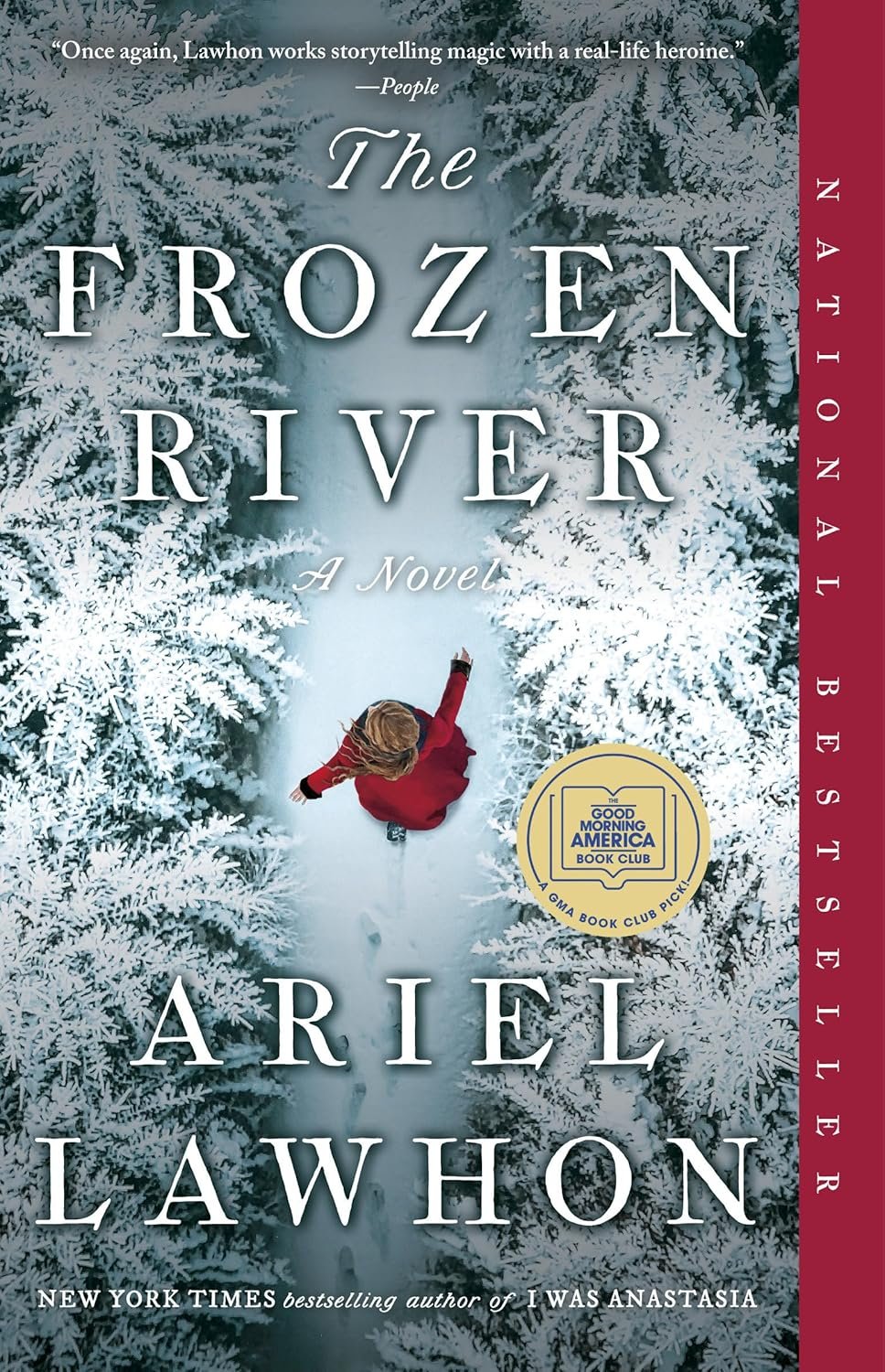
NEW YORK TIMES BESTSELLER • GMA BOOK CLUB PICK • AN NPR BOOK OF THE YEAR • From the New York Times bestselling author of I Was Anastasia and Code Name Hélène comes a gripping historical mystery inspired by the life and diary of Martha Ballard, a renowned 18th-century midwife who defied the legal system and wrote herself into American history.
“Fans of Outlander’s Claire Fraser will enjoy Lawhon’s Martha, who is brave and outspoken when it comes to protecting the innocent. . . impressive.”—The Washington Post
“Once again, Lawhon works storytelling magic with a real-life heroine.” —People Magazine
Maine, 1789: When the Kennebec River freezes, entombing a man in the ice, Martha Ballard is summoned to examine the body and determine cause of death. As a midwife and healer, she is privy to much of what goes on behind closed doors in Hallowell. Her diary is a record of every birth and death, crime and debacle that unfolds in the close-knit community. Months earlier, Martha documented the details of an alleged rape committed by two of the town’s most respected gentlemen—one of whom has now been found dead in the ice. But when a local physician undermines her conclusion, declaring the death to be an accident, Martha is forced to investigate the shocking murder on her own.
Over the course of one winter, as the trial nears, and whispers and prejudices mount, Martha doggedly pursues the truth. Her diary soon lands at the center of the scandal, implicating those she loves, and compelling Martha to decide where her own loyalties lie.
Clever, layered, and subversive, Ariel Lawhon’s newest offering introduces an unsung heroine who refused to accept anything less than justice at a time when women were considered best seen and not heard. The Frozen River is a thrilling, tense, and tender story about a remarkable woman who left an unparalleled legacy yet remains nearly forgotten to this day.
From the Publisher


The Frozen River is a richly layered historical novel that masterfully blends mystery, social commentary, and intimate character study. Set in late 18th-century Maine, the book draws readers into a world where justice is fragile, truth is inconvenient, and women’s voices are often dismissed—yet indispensable. Inspired by real historical records, the novel feels both meticulously researched and emotionally alive, offering a reading experience that is immersive, thoughtful, and deeply engaging.
At the heart of the story is Martha Ballard, a midwife and healer whose work places her at the center of life’s most private and consequential moments. From births to deaths, illnesses to secrets, Martha is a quiet witness to the realities of her community. When a man is discovered frozen in the Kennebec River, Martha is called upon to examine the body and determine the cause of death. What initially appears to be a tragic accident quickly becomes something far more complex, especially given Martha’s prior knowledge of the victim and her detailed diary entries documenting a serious crime involving respected members of the town.
One of the novel’s greatest strengths lies in its protagonist. Martha Ballard is portrayed as intelligent, observant, principled, and quietly courageous. She is not a conventional heroine in the dramatic sense; instead, her power comes from persistence, integrity, and an unwavering commitment to truth. Through her eyes, the reader experiences the tension between personal loyalty and moral responsibility, a conflict that grows more intense as the story unfolds. Martha’s internal struggles are as compelling as the external mystery, making her a deeply human and relatable character despite the historical distance.
The use of Martha’s diary as a narrative device adds remarkable depth to the novel. These entries serve as both evidence and personal reflection, grounding the story in authenticity while allowing insight into Martha’s thoughts and emotions. The diary becomes a powerful symbol of record-keeping and truth in a society where official accounts are often shaped by those in power. Through it, the novel explores themes of memory, credibility, and whose stories are deemed worthy of belief.
Ariel Lawhon’s prose is elegant and restrained, perfectly suited to the historical setting. Her descriptions of winter in Maine—the frozen river, the harsh weather, the isolation—are vivid without being excessive, creating an atmosphere that mirrors the emotional coldness Martha faces from a skeptical and judgmental society. The setting is not merely a backdrop but an active force that influences the characters’ choices and the progression of the plot.
The mystery itself is carefully constructed, unfolding gradually and rewarding patient readers. Rather than relying on shocking twists, the novel builds tension through accumulating details, conflicting testimonies, and social pressure. As the trial approaches and rumors spread, the stakes rise not only for uncovering the truth but for Martha’s standing in the community and the safety of those she cares about. The investigation highlights how justice can be distorted by prejudice, reputation, and gender, themes that feel strikingly relevant even in a modern context.
Another notable aspect of The Frozen River is its exploration of women’s roles and knowledge in a male-dominated world. Martha’s medical expertise, gained through years of experience, is repeatedly questioned by male authorities who lack her practical understanding. This tension between formal authority and lived expertise is handled with nuance, showing how systemic bias operates subtly and persistently. The novel does not present Martha as flawless or infallible, but it consistently affirms the value of her perspective and the cost of ignoring it.
The supporting characters are equally well-developed, each contributing to the moral complexity of the story. Friends, family members, neighbors, and officials are portrayed with empathy, even when their actions are frustrating or morally ambiguous. This complexity prevents the novel from slipping into simple binaries of good and evil, instead portraying a community shaped by fear, self-interest, and deeply ingrained norms.
Emotionally, the novel is both tense and tender. Moments of quiet domestic life, care, and compassion balance the darker elements of the plot, reminding readers of what is at stake beyond the resolution of a single crime. These intimate scenes enrich the narrative and reinforce the central theme that justice is not abstract—it affects real lives in profound ways.
In conclusion, The Frozen River is a compelling and thoughtful historical mystery that stands out for its strong sense of place, nuanced characters, and resonant themes. It offers more than suspense; it invites reflection on truth, power, and the enduring struggle to be heard. Readers who appreciate character-driven stories, historical authenticity, and morally complex narratives will find this novel deeply rewarding. Ariel Lawhon delivers a story that is both intellectually engaging and emotionally satisfying, bringing an overlooked historical figure to life with grace and conviction.