
OVER 1 MILLION COPIES SOLD!
The New York Times bestseller—for fans of All the Light We Cannot See and The Tattooist of Auschwitz!
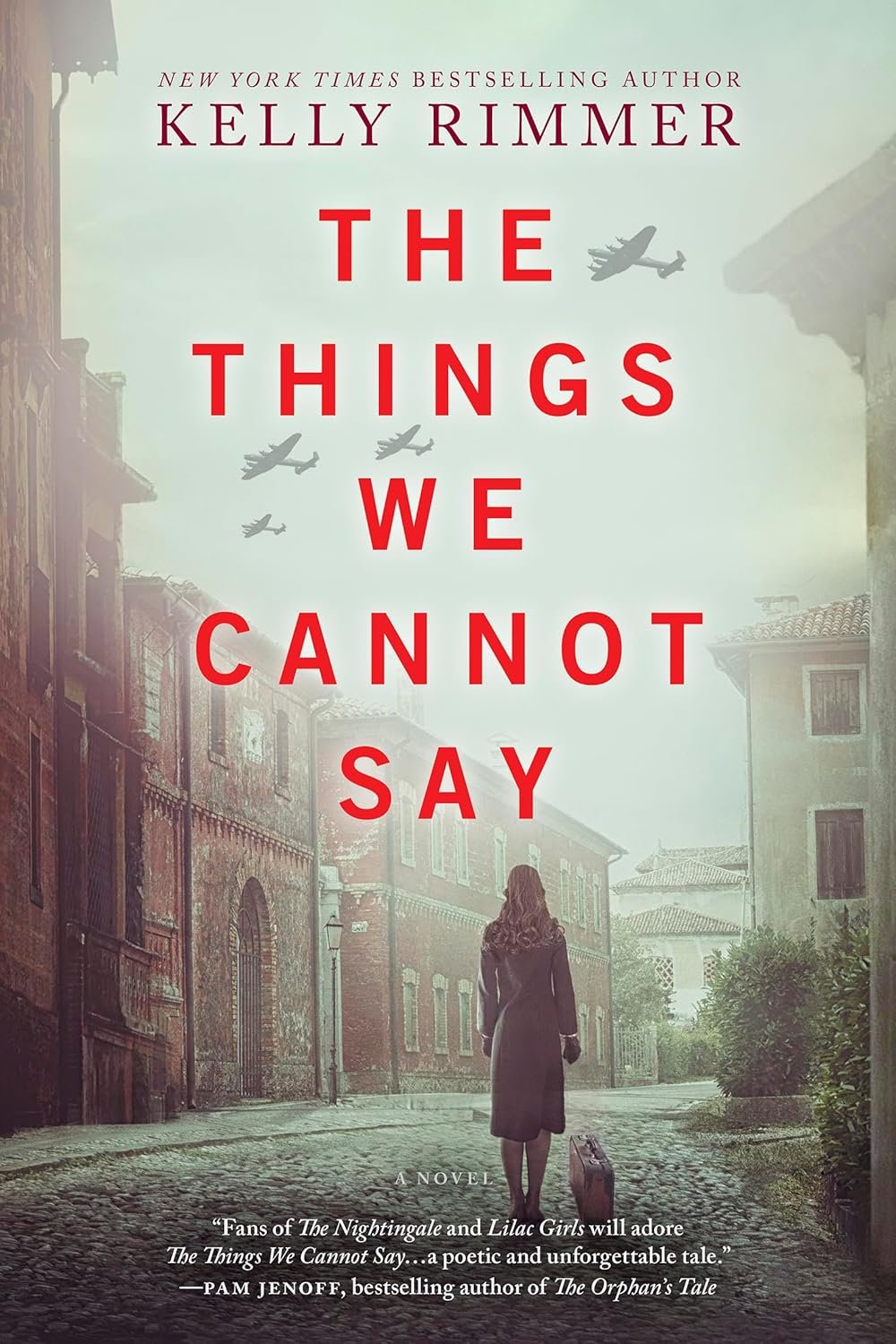
From the bestselling author of Truths I Never Told You, Before I Let You Go, and the The Warsaw Orphan, Kelly Rimmer’s powerful WWII novel follows a woman’s urgent search for answers to a family mystery that uncovers truths about herself that she never expected.
“Fans of The Nightingale and Lilac Girls will adore The Things We Cannot Say.” —Pam Jenoff, New York Times bestselling author
In 1942, Europe remains in the relentless grip of war. Just beyond the tents of the refugee camp she calls home, a young woman speaks her wedding vows. It’s a decision that will alter her destiny…and it’s a lie that will remain buried until the next century.
Since she was nine years old, Alina Dziak knew she would marry her best friend, Tomasz. Now fifteen and engaged, Alina is unconcerned by reports of Nazi soldiers at the Polish border, believing her neighbors that they pose no real threat, and dreams instead of the day Tomasz returns from college in Warsaw so they can be married. But little by little, injustice by brutal injustice, the Nazi occupation takes hold, and Alina’s tiny rural village, its families, are divided by fear and hate.
Then, as the fabric of their lives is slowly picked apart, Tomasz disappears. Where Alina used to measure time between visits from her beloved, now she measures the spaces between hope and despair, waiting for word from Tomasz and avoiding the attentions of the soldiers who patrol her parents’ farm. But for now, even deafening silence is preferable to grief.
Slipping between Nazi-occupied Poland and the frenetic pace of modern life, Kelly Rimmer creates an emotional and finely wrought narrative. The Things We Cannot Say is an unshakable reminder of the devastation when truth is silenced…and how it can take a lifetime to find our voice before we learn to trust it.
Don’t miss Kelly Rimmer’s newest novel, The Paris Agent, where a family’s innocent search for answers brings a long-forgotten, twenty-five-year-old mystery featuring two female SOE operatives comes to light!
For more by Kelly Rimmer, look forBefore I Let You GoTruths I Never Told YouThe Warsaw OrphanThe German WifeThe Midnight Estate
From the Publisher


The Things We Cannot Say is a deeply emotional and beautifully written World War II historical novel that explores love, loss, memory, and the enduring power of truth. Kelly Rimmer crafts a story that is both intimate and sweeping, weaving together past and present to show how the secrets of one generation can echo through the lives of the next. The novel stands as a poignant reminder that silence, though often born of survival, carries its own weight—and that finding one’s voice can be a lifelong journey.
The narrative unfolds across two timelines, one set in Nazi-occupied Poland during the early 1940s, and the other in the modern day. This dual structure allows the story to balance historical intensity with contemporary reflection, gradually revealing how the past shapes the present in ways that are not always immediately visible. Rimmer handles these transitions smoothly, creating a strong emotional bridge between generations and ensuring that both timelines feel equally compelling.
In the historical storyline, readers are introduced to Alina Dziak, a young Polish girl whose life is defined by her love for her childhood friend and fiancé, Tomasz. Their bond is tender, hopeful, and filled with the innocence of youth. At first, the threat of war feels distant, almost unreal, mirroring the way many ordinary people initially struggled to comprehend the magnitude of what was coming. This sense of normalcy slowly erodes as the Nazi occupation tightens its grip, and Alina’s world becomes unrecognizable.
Rimmer excels at portraying the gradual descent into fear and uncertainty. Rather than relying solely on dramatic moments, she shows how everyday life is dismantled piece by piece—through restrictions, suspicion, violence, and the erosion of trust within once-close communities. Alina’s village becomes a microcosm of a society under occupation, where neighbors are divided by ideology, survival instincts, and terror. These changes feel painfully realistic and emotionally grounded.
Alina herself is a quietly powerful protagonist. Her strength does not come from bold defiance, but from endurance, loyalty, and an unbreakable emotional core. As Tomasz disappears, her life becomes defined by waiting—waiting for news, for hope, for clarity. This waiting is portrayed with haunting effectiveness, capturing the emotional limbo experienced by countless people during wartime. The silence surrounding Tomasz’s fate becomes as heavy and damaging as any spoken truth.
The modern timeline adds another layer of emotional complexity to the novel. Through a contemporary woman searching for answers to a long-hidden family mystery, the story explores how trauma can be inherited, even when its origins are never openly discussed. This storyline is not merely a framing device; it is an essential part of the novel’s message. It shows how unspoken pain can shape identities, relationships, and emotional responses decades later.
One of the novel’s greatest strengths is its exploration of silence—what it protects and what it destroys. The Things We Cannot Say examines why people choose not to speak, especially in times of extreme danger, and how those choices can be acts of love as well as sources of lasting pain. Rimmer treats these moral complexities with sensitivity and nuance, never offering simple judgments. Instead, she invites readers to sit with the discomfort of ambiguity and to understand that survival often requires impossible decisions.
The prose is lyrical yet restrained, allowing the emotional weight of the story to emerge naturally. Rimmer does not sensationalize suffering; instead, she focuses on the human experience behind historical events. Her descriptions are vivid without being overwhelming, and her attention to emotional detail makes the characters feel achingly real. Moments of tenderness—shared glances, remembered promises, quiet acts of kindness—stand in stark contrast to the brutality surrounding them, making them all the more powerful.
Themes of love and loyalty run throughout the novel, not only in romantic relationships but also in familial bonds and friendships. Love is portrayed as both a source of strength and vulnerability, something that gives life meaning even as it exposes characters to profound loss. This emotional honesty is one of the reasons the novel resonates so deeply; it does not shy away from pain, but it also refuses to let despair have the final word.
The pacing of the novel is carefully balanced. While the story deals with heavy subject matter, it never feels overwhelming or stagnant. Each revelation is thoughtfully timed, drawing readers further into the mystery while maintaining emotional momentum. As the past and present storylines converge, the sense of inevitability builds, leading to a resolution that is both heartbreaking and cathartic.
Another notable aspect of the novel is its focus on female experience during wartime. Alina’s story highlights the unique dangers faced by women under occupation, as well as the quiet resilience required to endure them. Her perspective adds depth and specificity to the historical narrative, emphasizing that war’s impact is not only measured in battles fought, but in lives irrevocably altered behind the scenes.
Ultimately, The Things We Cannot Say is a novel about truth—how it is hidden, how it is discovered, and how it can transform those who finally confront it. It suggests that while silence may be necessary at times, healing often begins with acknowledgment. The novel’s emotional impact lingers long after the final page, encouraging reflection on family, history, and the stories we inherit.
In conclusion, The Things We Cannot Say is a moving and unforgettable work of historical fiction that combines emotional depth with historical insight. Kelly Rimmer delivers a story that honors the resilience of the human spirit while acknowledging the lasting scars of war. Readers who are drawn to character-driven narratives, dual timelines, and stories that explore love and loss across generations will find this novel profoundly rewarding. It is a testament to the power of storytelling—and to the voices that, once finally heard, can change everything.